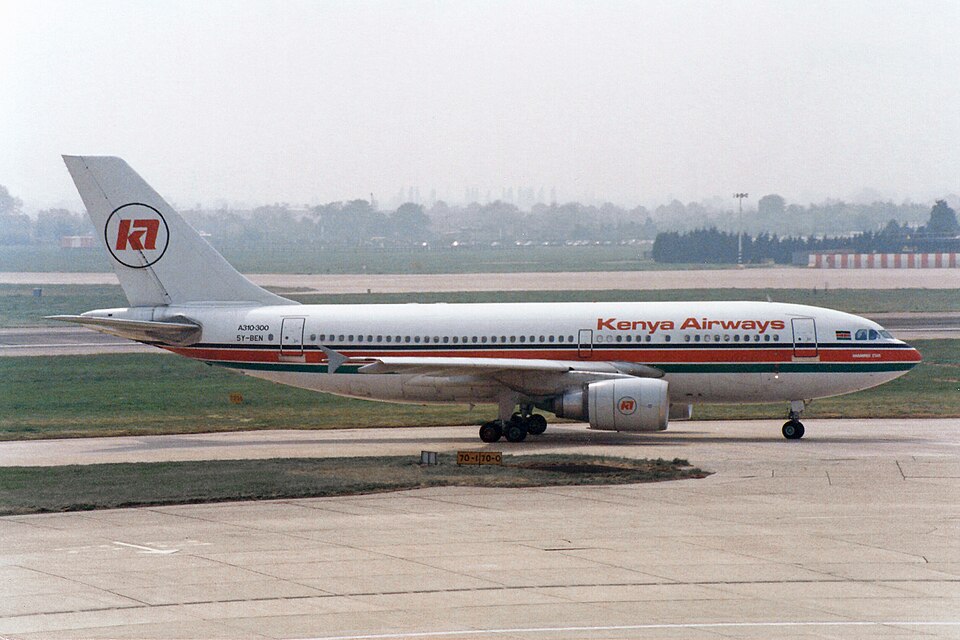
Incident Overview
On Sunday, January 30, 2000, Kenya Airways Flight KQ 431 was operating a scheduled international service from Abidjan to Nairobi via Lagos. The aircraft, an Airbus A310-304 with registration 5Y-BEN, carried 169 passengers and 10 crewmembers. The flight had diverted to Abidjan earlier that day due to unfavorable weather conditions in Lagos.
Timeline of Events
The relief crew, who had arrived two days prior, assumed command for the departure scheduled at 21:00 local time. At 20:56, the captain initiated the pre-takeoff checklist and announced a flex takeoff configuration. The aircraft began taxiing at 21:07, receiving clearance from the Abidjan control tower. This communication marked the last contact with air traffic control.
At 21:08:18, the captain applied takeoff thrust. Nine seconds later, the aircraft reached 100 knots. At 21:08:50, the captain called "V1 and Rotate," followed by a positive rate of climb announcement at 21:08:57. Immediately after retracting the landing gear, the stall warning system activated.
Contributing Factors
The pilot flying responded to the stick shaker activation by pushing forward on the control column to stop the shaking, inadvertently placing the aircraft into a descent. Although the captain ordered a climb at 21:09:22, the impact with the sea occurred approximately two seconds later, presumed at 21:09:24.
The investigation identified several contributing elements:
- The pilot flying’s control input induced a descent that went unnoticed despite radio altimeter callouts.
- GPWS warnings were masked by higher-priority stall and overspeed alerts.
- Nighttime conditions over the sea provided no external visual references to indicate proximity to the water surface.