Accident
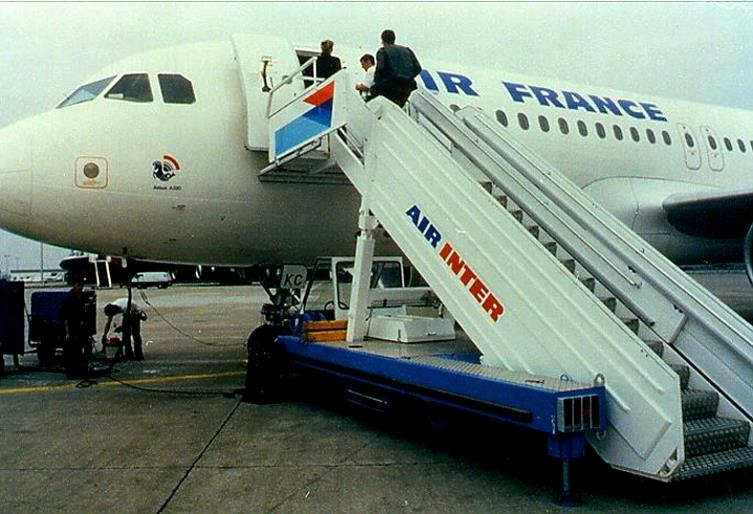
On June 26, 1988, an Airbus A320, registration F-GFKC, was destroyed when it impacted trees during a low pass over the runway at Mulhouse-Habsheim Airport, France. A fire broke out after the impact, killing three occupants.
Aircraft and Crew
The aircraft was an Airbus A320, the third in the Air France fleet, delivered on June 23, 1988. The flight crew consisted of two captains: the head of A320 training subdivision (Pilot Flying) and a captain participating in the placing into service of the A320 (Pilot Monitoring). On board were four cabin crew members and 130 passengers.
Flight
The Mulhouse Flying Club had requested Air France to perform a flyby at their air show. Air France prepared a low-speed pass with the gear down at 100 feet and another pass at high speed in clean configuration. While Air France had performed more than twenty low passes since 1987, the altitude of 100 feet was not allowed according to regulations; French air safety regulations imposed a minimum VFR overflight height of 170 feet.
The aircraft took off from nearby Basel-Mulhouse Airport at 14:41 and climbed to 1,000 feet above ground level (AGL). The crew started descent three minutes later, and Habsheim was in sight at 450 feet AGL. The Pilot Monitoring informed the Pilot Flying that the aircraft was reaching 100 feet at 14:45:14. Descent continued to 50 feet eight seconds later and further to 30–35 feet. Go-around power was added at 14:45:35. The A320 continued and touched trees approximately 60 meters from the end of runway 34R at 14:45:40, with a 14-degree pitch attitude and engines at 83% N1. The plane sank slowly into the forest, and a fire broke out.
Official Findings
The Commission determined that the accident resulted from the combination of the following conditions: 1) Very low flyover height, lower than surrounding obstacles; 2) Speed very slow and reducing to reach maximum possible angle of attack; 3) Engine speed at flight idle; 4) Late application of go-around power. This combination led to impact of the aircraft with the trees. The Commission believes that if the descent below 100 feet was not deliberate, it may have resulted from failure to take proper account of the visual and aural information intended to give the height of the aircraft.