Overview
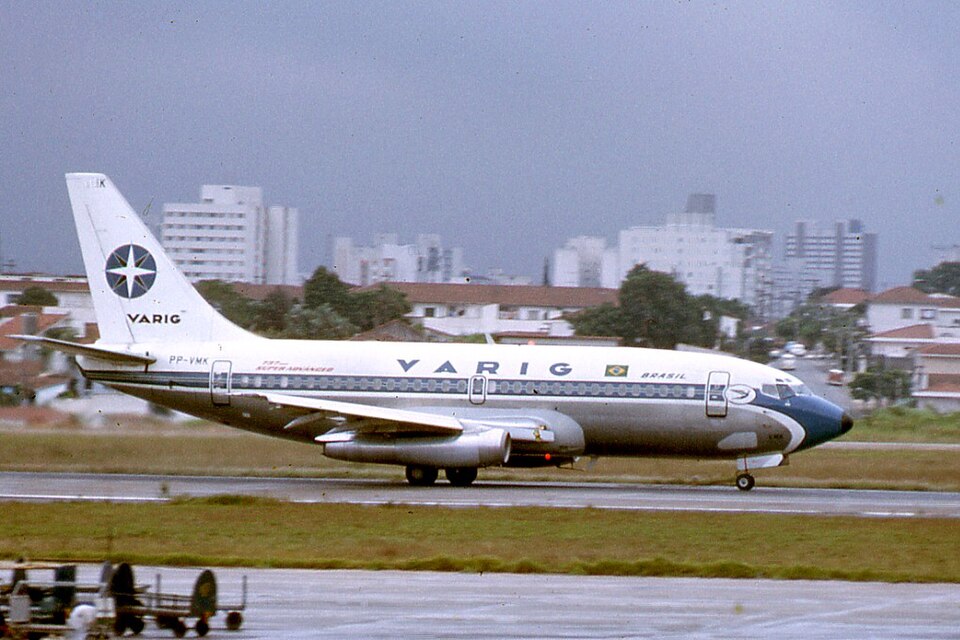
An aircraft operating a flight from Marabá Airport crashed in the jungle approximately 60 km from São José do Xingu after a series of navigational errors and fuel exhaustion. The accident resulted in 12 fatalities and 42 injuries. The aircraft was destroyed.
Timeline
After departure at 1725 local time, the crew was cleared to climb to flight level (FL) 290 and maintained a heading of 270° for 40 minutes. Subsequently, Belém Air Traffic Control cleared the flight to descend to FL200. However, the crew failed to locate navigational aids and lost radio contact. The course was changed to 090°, and the aircraft descended further to FL40. The crew then followed a river, heading 165°. Sunset and haze hampered visual navigation. The crew unsuccessfully attempted to establish radio contact on several frequencies and could not find navigational aids in the area. After locating an NDB, both engines stopped due to fuel exhaustion. The captain elected to make an emergency landing, and the aircraft crashed in the jungle. Rescue teams arrived 44 hours later.
Cause
The official investigation identified a combination of human and operational factors. The computerized flight plan used a four-digit representation of the magnetic bearing with the last digit representing a tenth of a degree, without a decimal separator. A course of '027.0' was presented as '0270', leading to the erroneous entry of 027° instead of 270°. Contributing psychological factors included misleading perception, reinforcement of errors, marginal attention, predisposition, attention fixation, and blocks in identifying heading errors. Operational factors included poor supervision in graphical representation of the computer flight plan, poor cockpit coordination, inadequate support staff (lack of radio contact by the operator's flight coordination), environmental influences (difficulties due to sunset and dry fog, as well as ionospheric propagation affecting radio aids), poor planning (lack of route letters), poor judgment in evaluating radio-navigation equipment, and other operational factors such as firming of operational doctrine.