Background
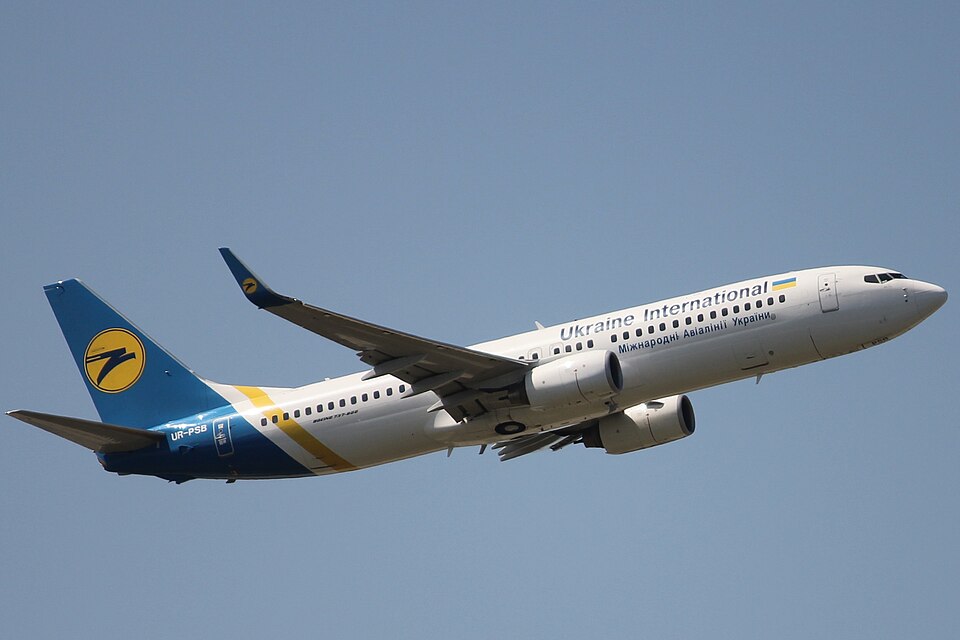
On Sunday, 11 November 2018, at Paris-Charles de Gaulle airport, a Boeing B737-800 registered UR-PSB, operated by Ukraine International Airlines (flight AUI 3SD), and an Airbus A320-200 registered F-HBNJ, operated by Air France (flight AF 48KZ), were preparing for departure. The B737 was bound for Kiev Boryspil, and the A320 for Bordeaux. Both flights were commercial air transport operations.
Sequence of Events
During flight preparation, the B737 crew selected the RANUX2B SID on the flight management computer (FMC), corresponding to runway 26R of the south twin runways. However, at 13:17:10, they received a departure clearance for the RANUX2A SID from runway 27L of the north twin runways. The crew did not update the FMC or cross-check the new clearance, as they were interrupted by a ramp agent delivering the load sheet. The take-off briefing was also cut short due to time pressure from the assigned slot.
At 13:52:36, the B737 was cleared for take-off from runway 27L. Shortly after, at 13:52:56, the A320 was cleared for take-off from runway 26R. The B737 took off first, and at 13:53:54, its flight management system switched to lateral navigation (LNAV) mode. At 13:54:00, the B737 overflew the opposite runway threshold and began a left turn as directed by the flight director, following the incorrect RANUX2B SID, which initially aligned with the axis of runway 26R.
At 13:54:10, the B737 crew was transferred to the north departure controller frequency. The aircraft was climbing at about 750 ft on the runway axis. At 13:54:27, the B737 contacted the north departure controller. Simultaneously, the north local controller called the south local controller via interphone to warn of the B737's left deviation. At 13:54:28, the south local controller ordered the A320 pilot to immediately stop climbing; at that moment, the A320 was at 1,610 ft.
The Short Term Conflict Alert (STCA) activated at 13:54:28. At that time, the B737 was at 1,980 ft, heading 206°, speed 189 kt; the A320 was at 1,650 ft on the runway 26R axis. The distance between the aircraft was 2.56 NM with a 300 ft altitude difference.
At 13:54:33, the north departure controller ordered the B737 to immediately turn right to heading 270°. The crew selected heading 270 on the flight control unit and began a right turn. At 13:54:43, the north departure controller again asked the south local controller to stop or turn the A320. The A320 had reached a maximum altitude of 2,070 ft and then descended to about 1,615 ft. By 13:54:53, vertical separation reached 1,000 ft and was increasing. At 13:55:07, the south local controller announced via interphone that the A320 was holding its altitude.
Post-incident Information
The B737 captain reported that after take-off, he did not check the SID on the navigation display (ND) when the flight director deviated left. The first officer stated that after receiving the clearance for RANUX2A, he did not modify the FMC and no cross-check was performed due to the load sheet interruption. After entering load data, the briefing was broken off because the take-off slot had been brought forward. He added that the crew followed the flight director without verifying the FMC data against the charts.
The A320 crew reported that just after take-off at about 1,400 ft, they entered a layer of cloud with zero visibility. The controller's instruction to stop climbing used emergency phraseology. The pilot flying made stick and power inputs, stabilizing the aircraft at 2,000 ft after temporarily climbing to 2,100 ft. They saw traffic on the right, 200 ft above them on their NDs. The first officer noted that stabilization was difficult due to the aircraft's light weight and high pitch attitude from the noise-abatement procedure. He was also hampered by not hearing emergency communications with the conflicting traffic due to frequency separation, and for a short time, the aircraft symbol overlapped TCAS information for the B737.
The north local controller stated that he saw the B737 turning after transfer to departure frequency. He contacted the south local controller via interphone to stop the A320's climb. In retrospect, he thought coordination could have been improved by using the interphone's general call function to alert the departure controllers.
Meteorological conditions included a sometimes unstable atmospheric disturbance with intermittent rain. The lowest forecast and reported ceilings were at 1,000 ft; no towering cumulus or cumulonimbus were reported. Winds were moderate south-westerly.
The B737 captain held an ATPL and had 5,719 total flight hours (2,163 as captain, 1,019 on type). The first officer held an ATPL with 2,998 hours on type. Both were qualified on the B737 300-900.
The incident involved loss of separation during simultaneous take-offs from parallel runways. No injuries or damage were reported.