What happened
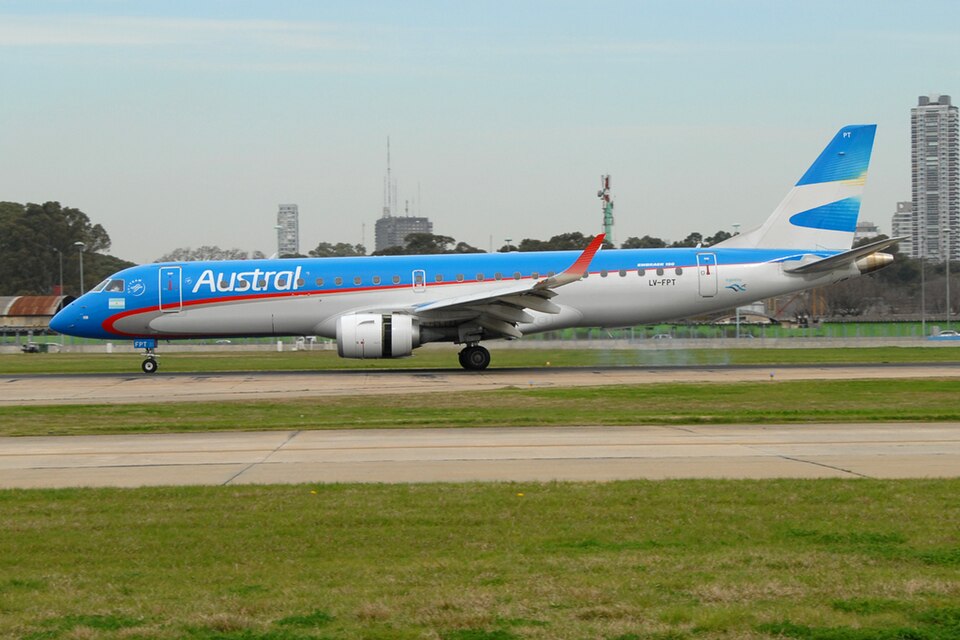
On December 11, 2025, at approximately 20:11 UTC, an Embraer ERJ-190 registered as LV-FPT operating as Aerolíneas Argentinas Flight ARG1812 experienced a Traffic Collision Avoidance System (TCAS) alert during its initial climb. The aircraft had departed Aeroparque Jorge Newbery (SABE) in Buenos Aires, bound for Puerto Madryn. Simultaneously, another Embraer ERJ-190, registered as LV-FPS and operating as Flight ARG1648, was taking off from the same aerodrome toward Neuquén.
Both aircraft were on different Instrumental Departure Procedures (IDPs): LV-FPT was following procedure PTA 8, while LV-FPS was executing PAL 9. At the time of the event, Flight ARG1812 was at flight level FL047 with clearance to climb to FL360, whereas Flight ARG1648 was maintaining FL50. The trajectories of the two aircraft converged laterally, with LV-FPS approaching from the left relative to LV-FPT's path. This geometric convergence, combined with reduced vertical separation, prompted the TCAS on LV-FPT to issue a Resolution Advisory (RA) predicting a potential loss of separation. Radar data indicated that Short Term Conflict Alert (STCA) warnings had also been generated prior to the TCAS activation. The situation normalized as the aircraft evolved along their respective paths, and alerts ceased.
The investigation
The Argentine Transportation Safety Board (JST) conducted a desk investigation into this incident. Analysts reviewed radar data, flight records, and the applicable Aeronautical Information Publication (AIP) procedures for Aeroparque. The focus was on the interaction between the specific departure procedures assigned to each aircraft and the altitude clearances issued by air traffic control. The investigation examined how the simultaneous use of PTA 8 and PAL 9 created a converging geometry in the initial climb phase, a period characterized by significant changes in aircraft configuration and altitude.
Findings
The primary causal factor was the convergence of departure trajectories resulting from the specific combination of Instrumental Departure Procedures (PTA 8 and PAL 9) used by the two aircraft. This lateral convergence, coupled with limited vertical separation during the initial climb phase, created a scenario that met the activation thresholds for both STCA and TCAS systems. The investigation highlighted the complexity of managing high-density traffic at Aeroparque, where simultaneous departures on different procedures can lead to close proximity situations despite standard air traffic control clearances.
Safety action
The source material does not explicitly list specific safety recommendations or actions taken by JST beyond the classification of the event as an incident involving a TCAS alert. The report notes that the interaction between departure procedures, altitude clearances, and alert systems in high-density environments requires continued monitoring to ensure safe separation standards are maintained.