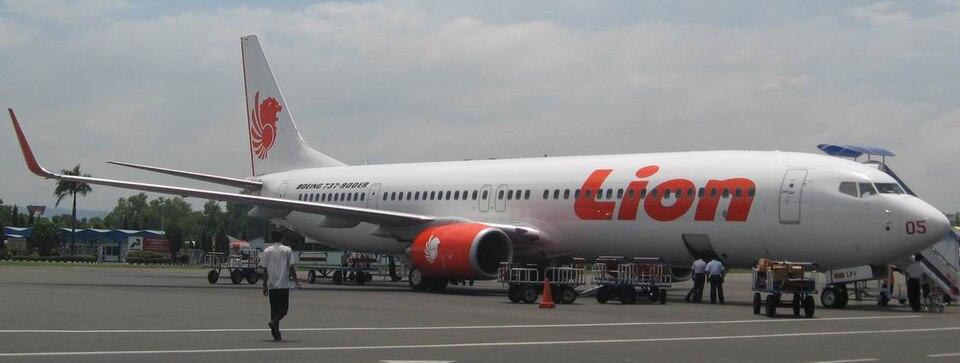
Runway Excursion of Lion Air Boeing 737-900ER in Pekanbaru

Casualties unknown • Sultan Syarif Kasim II Airport, Pekanbaru, ID

A Lion Air Boeing 737-900ER overran the runway at Sultan Syarif Kasim II Airport due to reduced braking effectiveness caused by rubber deposits and standing water.

What happened

On 14 February 2011, a Boeing 737-900ER, registration PK-LFI, operated by PT. Lion Mentari Airlines, was performing a scheduled flight from Jakarta to Pekanbaru. During the approach to Sultan Syarif Kasim II Airport, the flight crew encountered heavy rain and Cumulonimbus clouds, leading them to hold for weather improvement. Once visibility increased above landing minima, the aircraft proceeded with an ILS approach to runway 36.

Upon touchdown, the aircraft was operating with a landing weight of 66,066 kg. Although the pilot utilized thrust reversers and automatic braking, the aircraft failed to decelerate sufficiently. Despite the pilot applying maximum manual braking when the speed dropped below 90 knots, the aircraft continued along the runway and eventually exited the pavement, coming to a stop at the stopway with the right main wheel caught in the corner of the pavement. There were no injuries among the 219 people on board.

The investigation

The investigation focused on the aircraft's deceleration performance and the runway surface conditions. Investigators analyzed Flight Data Recorder (FDR) and Cockpit Voice Recorder (CVR) data, which revealed that while the aircraft initially met its preselected deceleration targets, the braking effectiveness dropped significantly during the late stages of the landing roll.

Data also highlighted a discrepancy in wind reporting. While the Tower controller reported calm surface winds, the aircraft's Flight Management Computer (FMC) and FDR indicated a tailwind component of approximately 8 to 10 knots. Investigators determined that the anemometer's location near vegetation and buildings likely caused inaccurate wind readings. Furthermore, a physical inspection of the runway identified significant rubber deposits and patches of standing water up to 3 cm deep.

Findings

  • The primary cause of the overrun was the significant deterioration of runway friction and brake effectiveness resulting from the combination of accumulated rubber deposits and standing water.
  • The aircraft was experiencing a tailwind of 8 to 10 knots, which increased the required stopping distance by approximately 816 feet compared to a no-wind scenario.
  • The Tower controller provided inaccurate wind information due to the placement of the anemometer in a location prone to turbulence.
  • The aircraft's braking coefficient decreased significantly during the landing roll, rendering manual maximum braking ineffective.

Probable cause

The failure of the aircraft to stop on the available runway was caused by a loss of braking effectiveness due to the presence of rubber deposits and standing water on the runway surface, compounded by an unpredicted tailwind component.

All Boeing 737-900 accidents →

Frequently asked questions

What happened in the 2011-02-14 Boeing 737-900ER accident near Sultan Syarif Kasim II Airport, Pekanbaru, ID?

A Lion Air Boeing 737-900ER overran the runway at Sultan Syarif Kasim II Airport due to reduced braking effectiveness caused by rubber deposits and standing water.

What aircraft was involved and where did it happen?

The accident on 2011-02-14 involved a Boeing 737-900ER, registration PK-LFI, operated by Lion Air, at Sultan Syarif Kasim II Airport, Pekanbaru, ID.

What was the probable cause of the accident?

The failure of the aircraft to stop on the available runway was caused by a loss of braking effectiveness due to the presence of rubber deposits and standing water on the runway surface, compounded by an unpredicted tailwind component.

Loading the flight search…