6 fatalities

1957-12-07: Scottish Aviation Twin Pioneer (G-AOEO) — Scottish Airlines — Libya, Libya

Libya, LibyaFlight

On December 7, 1957, a Scottish Aviation Twin Pioneer (registration G-AOEO) operated by Scottish Airlines was involved in an aviation accident near Libya, Libya in flight. 6 people were killed. Investigators recorded the probable cause as: The accident was the result of the failure in fatigue of the forward tube of the "V brace" structure in the outer panel of the port wing. This failure led to the breaking away of the outer panel of the port wing from the aircraft in flight. This summary draws on records from the Bureau of Aircraft Accidents Archives (B3A); 5 related events involving the same aircraft type or operator are linked below.

Sourcesthe Bureau of Aircraft Accidents Archives (B3A)Primary reportUpdated 1781248839Data APIEditorial standards
Aircraft registered G-AOEO
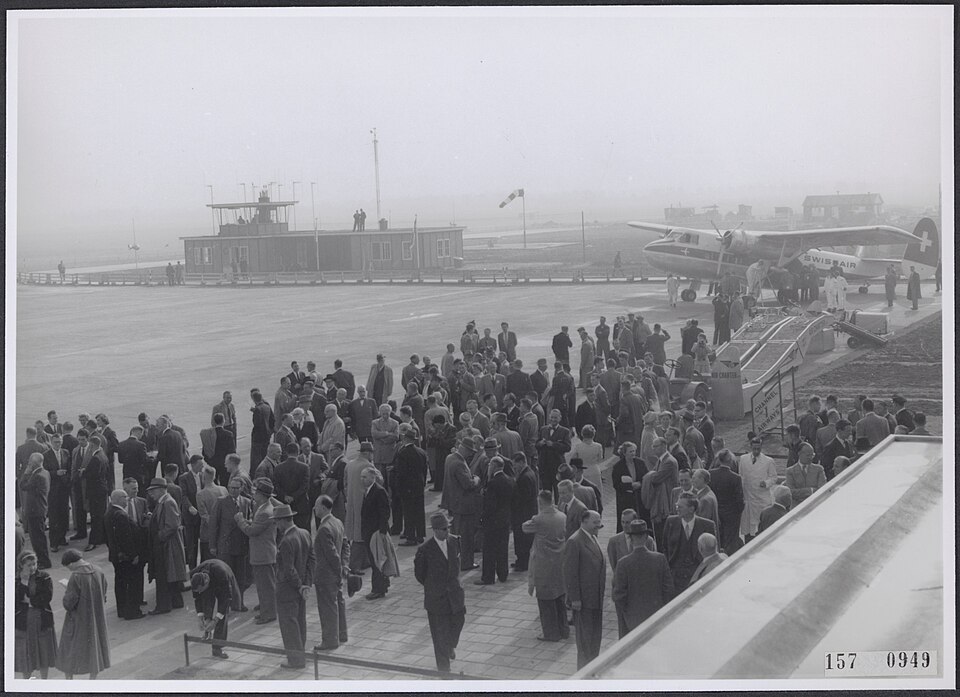
Aircraft registered G-AOEO. Photo: Joop van Bilsen for Anefo / CC0, via Wikimedia Commons

On 7 December, an aircraft flying from Idris Airport to the Esso camp at Wadi al Atshan crashed after the outer panel of the port wing separated in flight due to fatigue failure. All six occupants were killed.

Flight Details

On 7 December, an aircraft departed from Idris Airport for a flight to Fezzan, approximately 400 miles south, landing at the Esso (Petroleum Ltd.) camp at Wadi al Atshan. While at the camp, the aircraft conducted one local flight lasting 45 minutes. It was then refueled at Atshan and departed at 1427 LT for the return journey to Idris Airport, with two crew members and four passengers on board. The flight was expected to arrive at 1800 LT.

Search and Wreckage

When the aircraft failed to arrive at Idris Airport, a series of radio checks were conducted, followed by an extensive air and surface search. The wreckage was sighted the following day. The aircraft was destroyed by impact forces, and all six occupants were killed.

Probable Cause

According to official findings, the accident resulted from the failure in fatigue of the forward tube of the "V brace" structure in the outer panel of the port wing. This failure caused the outer panel of the port wing to break away from the aircraft in flight. Subsequently, the aircraft became completely uncontrollable and dove vertically to the ground.