1 fatality

2012-12-22: Swearingen SA227 Metro III (C-GFWX) — Perimeter Aviation — Sanikiluaq, Canada

Sanikiluaq, CanadaLanding (descent or approach)

On December 22, 2012, a Swearingen SA227 Metro III (registration C-GFWX) operated by Perimeter Aviation was involved in an aviation accident near Sanikiluaq, Canada during landing or approach. One person was killed. Investigators recorded the probable cause as: Findings as to causes and contributing factors: 1. The lack of required flight documents, such as instrument approach charts, compromised thoroughness and placed pressure on the captain to find a workaround solution during flight planning. This summary draws on records from the Bureau of Aircraft Accidents Archives (B3A); 8 related events involving the same aircraft type or operator are linked below.

Sourcesthe Bureau of Aircraft Accidents Archives (B3A)Primary reportUpdated 1781194454Data APIEditorial standards
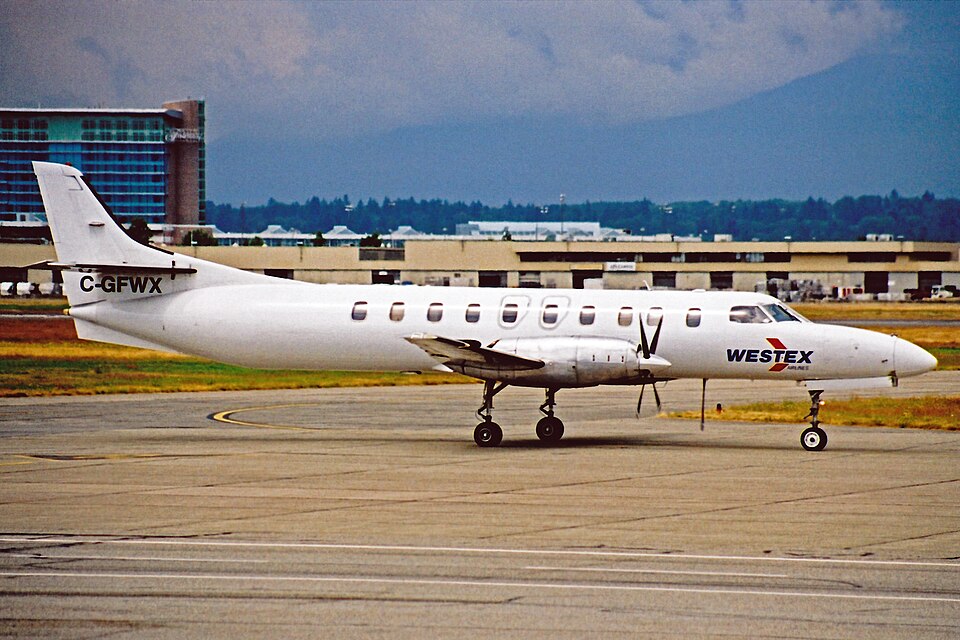
Aircraft registered C-GFWX
Aircraft registered C-GFWX. Photo: Ken Fielding / CC BY-SA 3.0, via Wikimedia Commons

On 22 December 2012, a Perimeter Aviation Fairchild SA227-AC Metro III (C-GFWX) crashed during landing at Sanikiluaq, Nunavut, after a non-precision approach and go-around, resulting in serious injuries, minor injuries, and one infant fatality.

Background

On 22 December 2012, Perimeter Aviation LP operated a charter flight (PAG993) from Winnipeg/James Armstrong Richardson International Airport, Manitoba, to Sanikiluaq, Nunavut, using a Fairchild SA227-AC Metro III aircraft (registration C-GFWX, serial number AC650B). The flight departed at 1939 Coordinated Universal Time (1339 Central Standard Time).

Flight and Approach Sequence

An attempted visual approach to Runway 09 was discontinued, and a non-precision non-directional beacon (NDB) approach to Runway 27 was conducted. The crew established visual contact with the runway environment and initiated a circling approach to Runway 09, but lost visual contact and returned to the Sanikiluaq NDB. A second NDB Runway 27 approach was performed with the intention to land on Runway 27. Visual contact with the runway environment was regained after passing the missed approach point. The aircraft executed a steep descent, followed by a rejected landing initiated at 20 to 50 feet above the runway. The aircraft struck the ground approximately 525 feet beyond the departure end of Runway 27. The occurrence took place at 2306 Coordinated Universal Time (1806 Eastern Standard Time) during hours of darkness. The 406 MHz emergency locator transmitter activated upon impact.

Injuries and Damage

The flight crew (2 members) and 1 passenger sustained serious injuries; 5 passengers received minor injuries; and 1 infant was fatally injured. Occupants evacuated through the forward right overwing exit and were immediately taken to the local health centre. The aircraft was destroyed.

Official Findings

The investigation identified the following causes and contributing factors: 1. The lack of required flight documents, such as instrument approach charts, compromised thoroughness and placed pressure on the captain during flight planning, and negatively affected crew situational awareness during approaches. 2. Weather conditions below published landing minima at the alternate airport and insufficient fuel eliminated favorable diversion options, putting pressure on the crew to land at Sanikiluaq. 3. Frustration, fatigue, and increased workload and stress during instrument approaches led to attentional narrowing and a shift from well-learned procedures. 4. The lack of an instrument approach for the into-wind runway and unsuccessful circling attempts led the crew to choose a tailwind landing, resulting in a steep, unstable approach. 5. The final descent was initiated beyond the missed approach point, and with a 14-knot tailwind, the aircraft remained above the desired 3-degree descent path. 6. Neither pilot heard ground proximity warning system warnings; both were focused on landing. 7. During final approach, the aircraft was unstable in several parameters, contributing to excessive speed and altitude halfway down the runway. 8. The aircraft was not positioned to land and stop within the runway confines, and a go-around was initiated from a low-energy landing regime. 9. The captain possibly eased off on the control column due to low airspeed, which, combined with a configuration change, may have contributed to poor climb performance. 10. A sufficient rate of climb to ensure obstacle clearance was not established, and the aircraft collided with terrain. 11. The infant passenger was not restrained in a child restraint system; the infant was ejected from the mother's arms during impact, and contact with interior surfaces contributed to the fatal injuries.

Additional risk findings and other observations were also documented in the investigation report.

Probable cause

Findings as to causes and contributing factors: 1. The lack of required flight documents, such as instrument approach charts, compromised thoroughness and placed pressure on the captain to find a workaround solution during flight planning. It also negatively affected the crew’s situational awareness during the approaches at CYSK (Sanikiluaq). 2. Weather conditions below published landing minima for the approach at the alternate airport CYGW (Kuujjuarapik) and insufficient fuel to make CYGL (La Grande Rivière) eliminated any favourable diversion options. The possibility of a successful landing at CYGW was considered unlikely and put pressure on the crew to land at CYSK (Sanikiluaq). 3. Frustration, fatigue, and an increase in workload and stress during the instrument approaches resulted in crew attentional narrowing and a shift away from welllearned, highly practised procedures. 4. Due to the lack of an instrument approach for the into-wind runway and the unsuccessful attempts at circling, the crew chose the option of landing with a tailwind, resulting in a steep, unstable approach. 5. The final descent was initiated beyond the missed approach point and, combined with the 14-knot tailwind, resulted in the aircraft remaining above the desired 3-degree descent path. 6. Neither pilot heard the ground proximity warning system warnings; both were focused on landing the aircraft to the exclusion of other indicators that warranted alternative action. 7. During the final approach, the aircraft was unstable in several parameters. This instability contributed to the aircraft being half-way down the runway with excessive speed and altitude. 8. The aircraft was not in a position to land and stop within the confines of the runway, and a go-around was initiated from a low-energy landing regime. 9. The captain possibly eased off on the control column in the climb due to the low airspeed. This, in combination with the configuration change at a critical phase of flight, as called for in the company procedures, may have contributed to the aircraft’s poor climb performance. 10. A rate of climb sufficient to ensure clearance from obstacles was not established, and the aircraft collided with terrain. 11. The infant passenger was not restrained in a child restraint system, nor was one required by regulations. The infant was ejected from the mother’s arms during the impact sequence, and contact with the interior surfaces of the aircraft contributed to the fatal injuries.