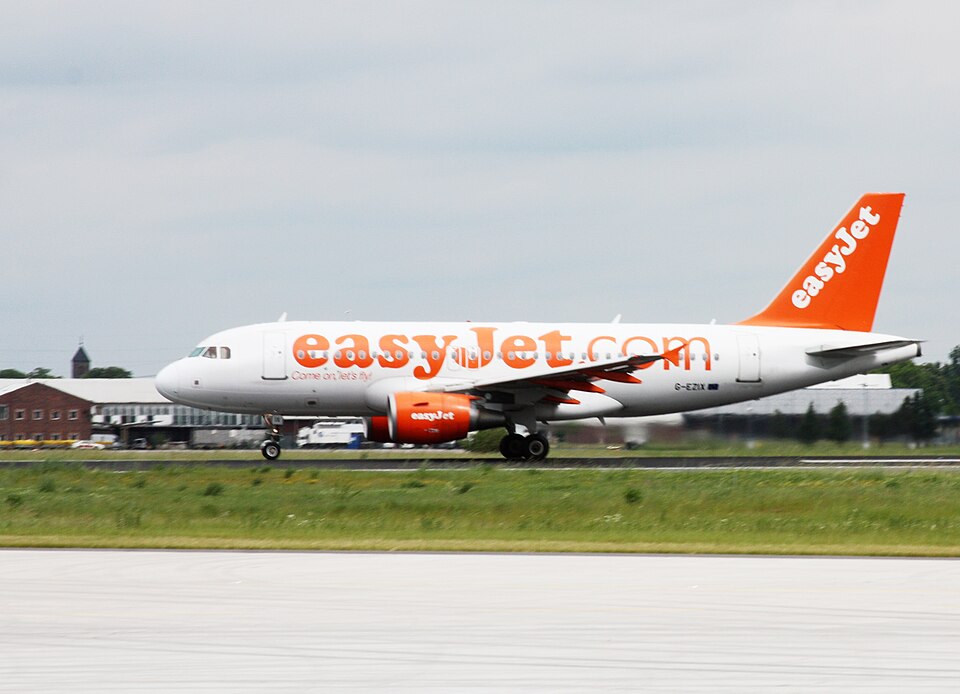
History of the Flight
On 21 September 2014 at 13:32 UTC, an Airbus A319-111 aircraft, registration G-EZIX, operated by EasyJet Airlines, encountered turbulence during a scheduled passenger flight from Liverpool Airport (EGGP) to Adolfo Suárez Madrid-Barajas Airport (LEMD). While descending for the approach, the flight crew activated the seat belt sign and instructed the flight attendants to secure the cabin.
During the descent, after passing through Flight Level 150 (FL150), the aircraft crossed a layer of cumulus clouds approximately 2,000 feet thick. This caused the aircraft to fall and shake sharply. As a result, all four flight attendants, who were securing the passenger cabin, fell to the floor. One flight attendant, who remained in the rear galley, sustained a fracture of the scaphoid bone in her wrist, classified as a serious injury. The other three flight attendants received minor bruises. The 153 passengers on board reported no injuries.
The flight continued and landed without further incident. Upon landing, the injured flight attendant received medical attention and was later transported back to her base on the return flight that same day.
Meteorological and Operational Information
Air traffic control had not received reports of turbulence from preceding traffic. The flight crew had adequate weather information during flight planning. The turbulence was not detected by the flight crew prior to the encounter.
Injuries
According to the official report, one crew member suffered a serious injury (broken scaphoid bone), three crew members sustained minor injuries, and the remaining two crew members and all 153 passengers were uninjured.
Probable Cause
The investigation identified the cause of the accident as encountering strong turbulence that was not detected by the flight crew.