Introduction
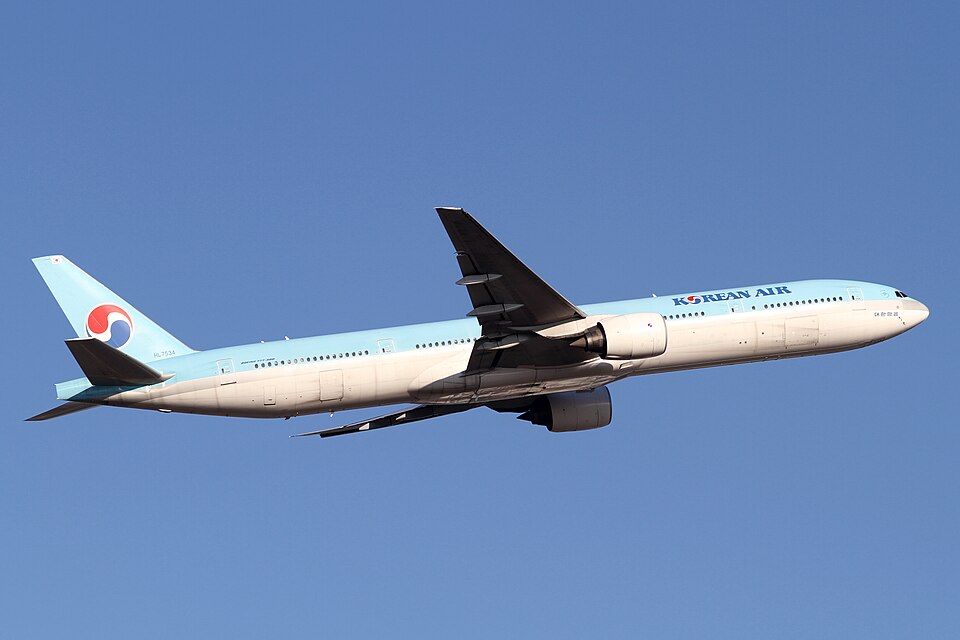
On Friday, May 27, 2016, a Boeing 777-300, registered HL7534, operated by Korean Air Lines Co., Ltd., as Flight 2708, was taking off from runway 34R at Tokyo International Airport for Gimpo International Airport. At around 12:38 JST, a warning indicated a fire from the No.1 (left-side) engine, prompting the flight crew to reject the takeoff and stop the aircraft on the runway. An emergency evacuation was conducted.
History of the Flight
According to ATC communication records, FDR, and CVR data, the aircraft began its takeoff roll. When the fire warning activated, the crew performed a rejected takeoff and stopped the aircraft on the runway. The emergency evacuation was initiated. There were 319 people on board: the pilot in command, 16 other crew members, and 302 passengers. Among them, 40 passengers received slight injuries.
Damage to the Aircraft and Engine
The No.1 engine sustained significant damage. The 1st stage high pressure turbine (HPT) disk fractured, and fragments penetrated the engine case. The Fuel Oil Heat Exchanger outer case developed cracks, leading to fuel and engine oil leaks that contacted hot engine parts and ignited. The aircraft's airframe also sustained damage from the fire.
Investigation Findings
The Japan Transport Safety Board investigated. The fracture of the 1st stage HPT disk was attributed to a step machined exceeding allowable limits during manufacturing of a U-shaped groove on the aft side of the disk. Low-cycle fatigue cracks initiated from this step and propagated during engine operation. The step was not detected during manufacturer inspection, and the cracks were not found during non-destructive inspections by Korean Air Lines during maintenance.
The fire resulted from fragments penetrating the engine case and from the engine rundown loads causing cracks in the Fuel Oil Heat Exchanger, allowing fuel and oil to leak onto hot surfaces and ignite.
Emergency Evacuation
The emergency evacuation was carried out after the aircraft stopped. Video records and crew statements provided details of the evacuation process. The pilot in command made the decision to evacuate. Flight crew and cabin attendants followed procedures, and slides were deployed.
Probable Causes
The investigation stated: "It is highly probable that the causes of this accident were the fracture of the high pressure turbine (HPT) disk of the No.1 (left-side) engine during the takeoff ground roll of the HL7534, the penetration of the fragment through the engine case and the occurrence of subsequent fires. Regarding the cause for the 1st stage HPT disk to be fractured, it is probable that a step was machined exceeding the allowable limit when machining U-shaped groove on the aft side of the 1st stage HPT disk to manufacture the engine and from this step the low-cycle fatigue cracks were initiated and propagated during running of engine. Regarding why the step could not be found, it is somewhat likely that defects failed to be detected at the time of the inspection by the manufacturer during the production process. And as for the cracks that were not found, it is somewhat likely that those cracks failed to be detected at non-destructive inspection on the disk by the Korean Airlines Co., Ltd, at the time of maintenance of the engine in use. Regarding the fire breakout from the No.1 engine, it is probable that due to the impact forces generated by the release of the fragment from the ruptured rim part of the 1st stage HPT disk through the engine case and the engine rundown loads generated when the engine stopped suddenly, the cracks were developed in the outer case of the Fuel Oil Heat Exchanger and the fuel and engine oil leaking through these cracks contacted the hot area of engine case of the No.1 engine to be ignited."