Background
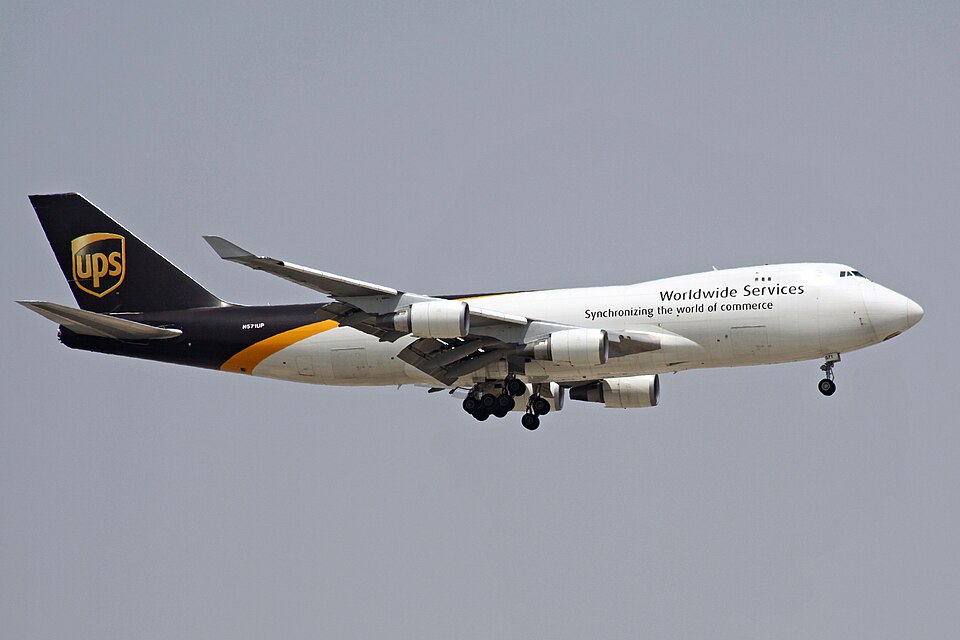
A four-engine cargo aircraft was operating a scheduled flight from Hong Kong to Cologne with an intermediate stop in Dubai. The crew consisted of two pilots. After departing Dubai, the aircraft climbed toward its selected cruise altitude of 32,000 feet.
Emergency Declaration
Approximately one minute after passing the BALUS waypoint, the Fire Warning Master Warning Light illuminated and the audible fire bell sounded, indicating a fire on the main deck forward. The captain informed Bahrain Air Traffic Control (BAE-C) of the fire indication and requested an immediate landing. Bahrain ATC advised that Doha International Airport was at the aircraft’s 10 o’clock position, 100 nautical miles away. The captain elected to return to the departure airport, Dubai (DXB).
Crew Actions and Cockpit Environment
The crew began the emergency checklist for fire/smoke/fumes. They changed the selected altitude to 28,000 feet and initiated a descent. The autopilot was disconnected and reconnected, then disconnected again, with the captain manually flying. Fire suppression was activated, and the PACK 1 status showed off line, while PACKS 2 and 3 were already off. The crew donned supplemental oxygen masks. There was confusion regarding intercom microphone operation.
The cockpit began to fill with persistent smoke and fumes, impairing the crew’s ability to view primary flight displays, communication panels, and outside references. The smoke shutter was opened but smoke remained. The crew rest smoke detector activated and remained on.
At approximately 15:20, during the emergency descent at around 21,000 feet cabin altitude, the captain noted high temperature in the cockpit. Shortly after, the captain’s oxygen supply failed abruptly. There was confusion about the location of the alternative oxygen supply. The captain left the left seat. Based on pathological information, the captain lost consciousness due to toxic poisoning. The first officer assumed pilot flying duties and remained the sole pilot for the remainder of the flight.
Communication Challenges
The first officer reported to Bahrain ATC that due to limited visibility, it was not possible to change radio frequencies on the audio control panel. Communication was maintained via relay aircraft and landlines. The crew stayed on the Bahrain frequency. All 121.5 MHz transmissions were keyed via VHF-R, while other communications used VHF-L. The first officer did not appear to hear transmissions from air traffic control or relay aircraft on the guard frequency.
Approach to Dubai
The aircraft approached Dubai Runway 12L. The computed airspeed was 350 knots at 9,000 feet, descending on a heading of 105 degrees to intercept the ILS. The first officer selected the Approach mode on the Mode Control Panel; the aircraft captured the glide slope but the autopilot did not transition to localizer mode. Air traffic control, via a relay aircraft, advised the pilot that the aircraft was too fast and too high and requested a 360-degree turn if able.