Incident Summary
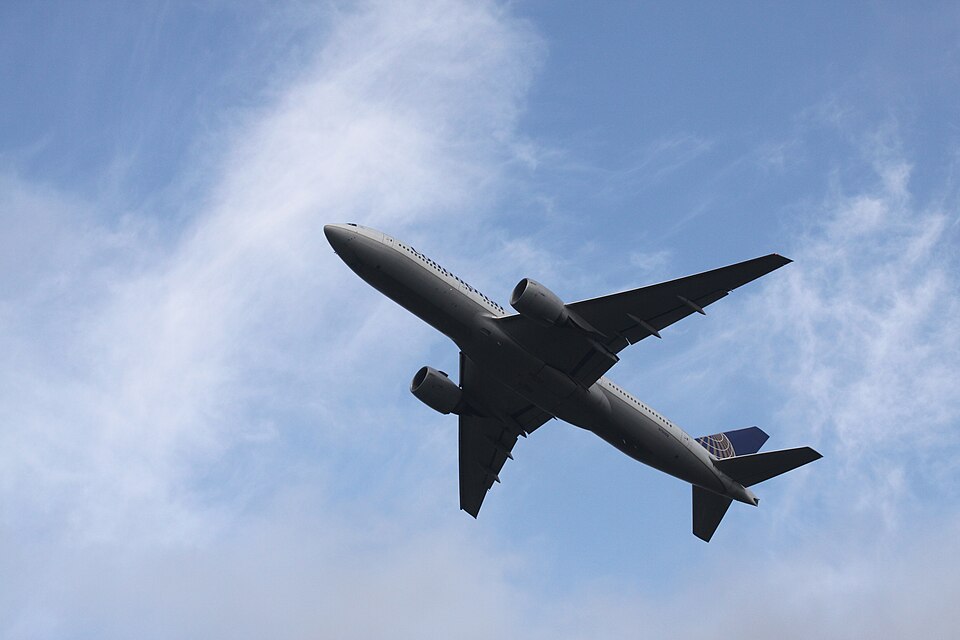
During a near-maximum gross weight takeoff from runway 4L in gusty winds, the captain reported that rotation felt normal but the aircraft did not become airborne as expected. As rotation continued, the tail section contacted the runway, and the "tail strike" EICAS message appeared. The crew completed the takeoff, performed all checklists, jettisoned fuel, and returned for an uneventful landing.
Wind recorded at the airport approximately one minute after the event showed winds from 280 degrees at 21 knots, gusting to 28 knots.
Flight Data Recorder Analysis
Review of the digital flight data recorder (DFDR) data revealed that at the start of the takeoff roll, the captain's control wheel was turned 25.5 degrees to the left, deflecting the left wing's outboard aileron, flaperon, and six of seven spoilers upward, consistent with crosswind correction. During the roll, wheel input varied between 19.6 and 37.5 degrees left; at rotation, it was 38.4 degrees left. The control column moved aft with 22.7 pounds of force, raising the pitch to 3 degrees nose up. As rotation continued, the pilot initially held a pitch consistent with previous flights, then pulled further aft, increasing pitch to about 13 degrees nose up, the tail strike attitude. One second later, with both main landing gear indicating no weight on wheels, the control column reached its maximum aft position of 9.2 degrees, and pitch reached 17.8 degrees.
Performance Study Results
A Safety Board vehicle performance study compared airspeed and groundspeed, determining that a wind gust caused an approximate 7-knot loss in airspeed. Lateral control wheel input during rotation ranged from 24 to 37 degrees, and the maximum pitch rate was about 6.0 degrees per second. Using a Boeing estimation method, three factors were found to reduce tail clearance: the loss of airspeed from a tailwind gust during rotation, lift loss from lateral control surface deflection, and a pitch rate exceeding recommendations. These combined for a total reduction of 150–170 percent of nominal tail clearance. The study concluded that reducing pitch rate to Boeing's recommended 2.5 degrees per second would have brought the reduction to 80–100 percent, and a 1-knot increase in rotation speed would have provided about a 7 percent increase in tail clearance margin.
Boeing specifies a typical liftoff attitude of 8.5 degrees, minimum tail clearance of 37 inches, and tail strike pitch attitude of 12.1 degrees. The operator's flight manual warns: "Avoid any tendency to rapidly rotate to a 10 degree pitch attitude and hold it until lift-off. This technique invites a tail strike." Neither Boeing nor the operator had procedures for increasing rotation speed to compensate for crosswind or tailwind conditions.