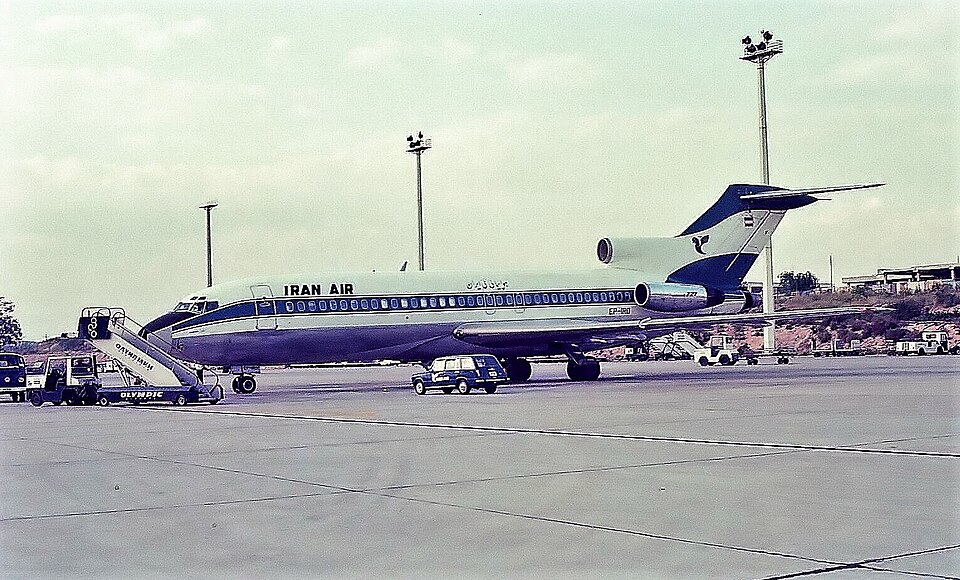
Background
On the day of the accident, Iranian air traffic controllers were on strike, leading to the cancellation of hundreds of domestic flights. The strike was interrupted at 1600 local time, after which flights resumed. At 1740 LT, Flight IR291 departed from Mashad Airport on a scheduled service to Tehran-Mehrabad Airport, carrying 120 passengers and a crew of eight.
Approach and Impact
At 1852 LT, air traffic control at Tehran-Mehrabad Airport cleared the crew for a direct approach to runway 29. At 1905 LT, the dispatcher instructed the crew to take a 360-degree heading to reach the Varamin non-directional beacon. During the approach, the copilot informed the captain that the VORTAC was providing a wrong radial course, but the captain did not respond to this message. At 1911 LT, while descending in limited visibility due to night, snowfall, and fog, the aircraft struck the slope of a mountain in the Alborz Mountain Range. The wreckage was discovered several hours later in snow-covered terrain about 29 km north of Tehran Airport. The aircraft disintegrated on impact, and none of the 128 occupants survived.
Official Findings
The probable cause as stated in the official investigation report: "It is believed that the accident was the consequence of a controlled flight into terrain, favored by an inoperable instrument landing system (ILS) of runway 29, when the ground radar was inoperative. The accident occurred just three hours after the Iranian air traffic controllers had resumed work after a strike period till 1600LT. The lack of visibility due to night and poor weather conditions remains a contributing factor."