Flight Details
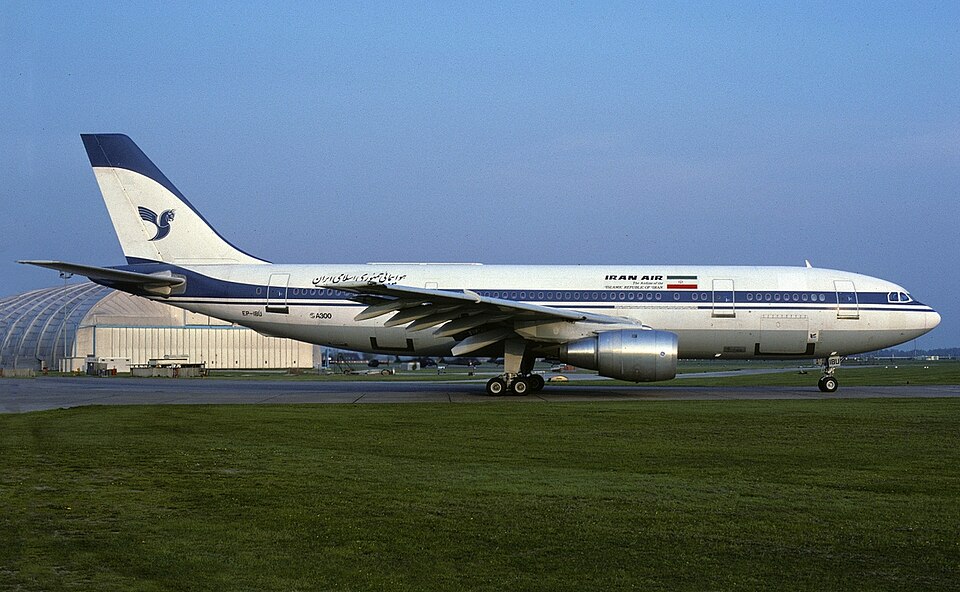
Iran Air Flight 451 arrived at Bandar Abbas from Tehran at 08:40. The Airbus A300 was scheduled to continue to Dubai as flight IR655. Prior to departure, the crew received an enroute clearance to Dubai via the flight planned route A59 and A59W at flight level 140.
Takeoff and Climb
The flight departed from runway 21 at 10:17 hours and climbed straight ahead. Two minutes later, the crew reported leaving 3,500 feet for FL140 on Airway A59, estimating MOBET at 06:53 UTC (10:23 Iran time). At 10:24:00, the aircraft passed MOBET out of FL120.
Missile Strike
At 10:24:43, the Airbus was struck by two surface-to-air missiles. The tail and one wing broke off as a result of the explosions, causing loss of control. The aircraft crashed into the sea.
US Navy Vessels
The missiles were fired by the US Navy cruiser USS Vincennes. It was operating in the area together with the frigates USS Elmer Montgomery and USS John H. Sides to protect other ships in the area. At about the time the Airbus took off, the radar aboard USS Vincennes picked up a brief IFF mode 2 response, leading to the mistaken identification of the Airbus as a hostile F-14 aircraft.
Radio Challenges
USS Vincennes issued seven challenges on the Military Air Distress (MAD) frequency 243 MHz, addressed to 'Iranian aircraft', 'Iranian fighter' or 'Iranian F-14'. These were followed by three challenges on the International Air Defence (IAD) radio frequency (121.5 MHz). Due to increasing tension in the area—on May 17, 1987, an Iraqi Mirage had attacked USS Stark—all aircraft in the area had to monitor 121.5 MHz. There was no response.
Radar Misinterpretation
Radar operators reported that the incoming plane was descending with increasing speed. In fact, the Airbus was climbing. Considering itself and USS Montgomery under aggression, USS Vincennes launched missiles against the perceived hostile target at 10:24:22. It remains uncertain whether the flight crew of IR655, able only to monitor the IAD frequency, could have rapidly identified their flight as the subject of the challenges.