Casualties unknown

1993-03-31: Boeing 747-121 (N473EV) — Japan Airlines — Anchorage, AK

Anchorage, AK, US

On March 31, 1993, a Boeing 747-121 (registration N473EV) operated by Japan Airlines was involved in an aviation accident near Anchorage, AK. Investigators recorded the probable cause as: A fatigue crack near the forward end of the number 2 engine pylon's forward firewall web reduced its ultimate lateral load-carrying capability, and the aircraft encountered severe or extreme turbulence that produced dynamic multi-axis lateral loadings… This summary draws on records from the U.S. National Transportation Safety Board (NTSB) historical archive; 16 related events involving the same aircraft type or operator are linked below.

Sourcesthe U.S. National Transportation Safety Board (NTSB) historical archivePrimary reportUpdated 1781061362Data APIEditorial standards
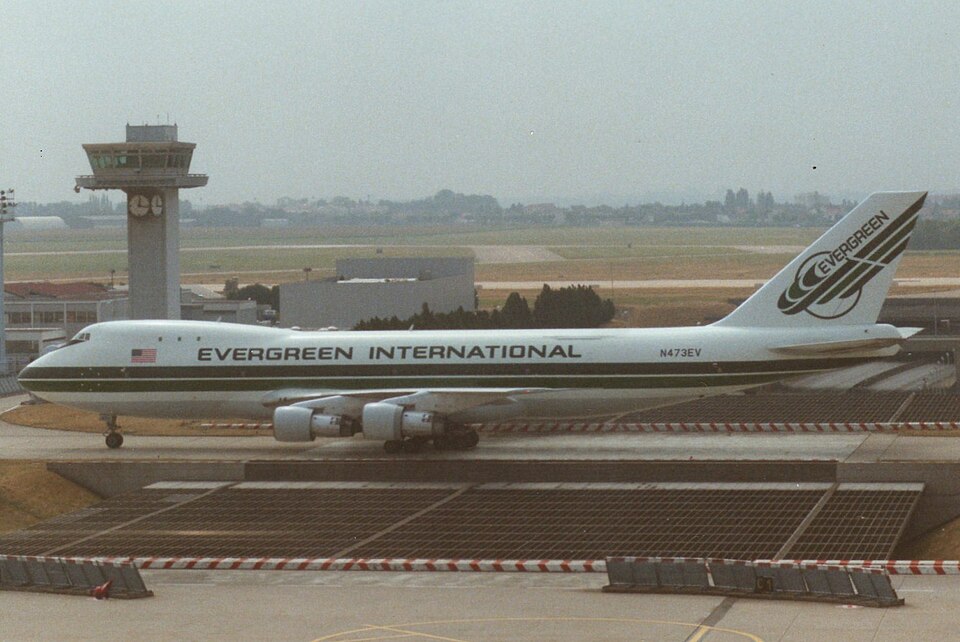
Aircraft registered N473EV
Aircraft registered N473EV. Photo: simon butler / CC BY 2.0, via Wikimedia Commons

Shortly after takeoff from Anchorage, an aircraft encountered severe turbulence, causing the number 2 engine and pylon to separate. The flightcrew declared an emergency and returned for an uneventful landing. Investigation found a fatigue crack in the pylon.

Incident Overview

Shortly after takeoff from Anchorage, the airplane flew into an area of severe turbulence while climbing through an altitude of about 2000 feet. During the encounter, the number 2 engine and its pylon separated from the airplane. The flightcrew declared an emergency and returned to Anchorage, where an uneventful landing was accomplished.

Investigation Findings

The investigation revealed that a strong easterly wind interacted with mountains east of Anchorage, producing mountain wave activity. This resulted in the aircraft encountering severe or possibly extreme turbulence. There was evidence that this turbulence produced dynamic multi-axis lateral loadings that exceeded the ultimate lateral load-carrying capability of the number 2 engine pylon. The pylon's load-carrying capability had already been reduced by the presence of a fatigue crack near the forward end of the pylon's forward firewall web.

Probable cause

A fatigue crack near the forward end of the number 2 engine pylon's forward firewall web reduced its ultimate lateral load-carrying capability, and the aircraft encountered severe or extreme turbulence that produced dynamic multi-axis lateral loadings exceeding that capability.

Investigation report by the U.S. National Transportation Safety Board (NTSB) historical archive. Original record: https://carol.ntsb.gov/event/20001211X11963. This page is a structured re-presentation; facts and quotes are in the National Transportation Safety Board (NTSB), United States.