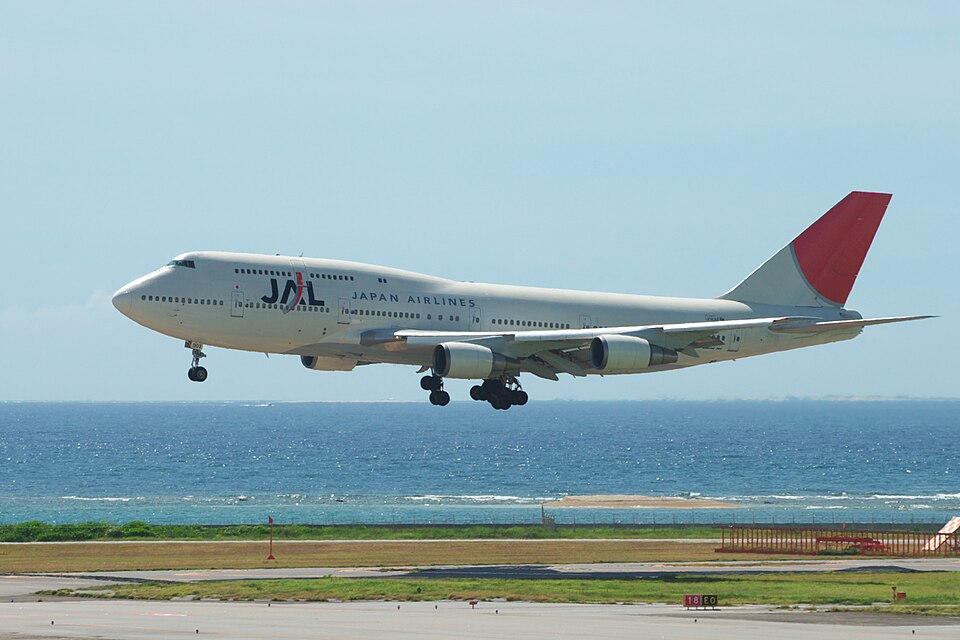
Flight History
Japan Airlines Flight 356, a Boeing 747-400D registered as JA8903, was en route from Tokyo to Naha when, at approximately 10:57 Japan Standard Time on October 21, 2002, it encountered severe windshear while descending over the sea about 8 nautical miles southeast of Hamamatsu City. According to the digital flight data recorder and cockpit voice recorder data, the aircraft was in descent when it experienced a rapid increase in airspeed, followed by a pitch-up motion. The autopilot attempted to counter the pitch increase but eventually disengaged, after which the crew manually maneuvered the aircraft.
Injuries and Damage
The incident resulted in serious injuries to an unspecified number of passengers. Minor injuries were also reported among passengers and crew. The aircraft sustained damage, though the specific details of the damage were not disclosed in the report.
Weather Conditions
Meteorological analysis indicated the presence of a cumulonimbus cloud in the vicinity. The aircraft likely encountered a strong windshear associated with that cloud, leading to a sudden change in airspeed and aircraft attitude.
Aircraft and Crew
The Boeing 747-400D, powered by four engines, was operated by Japan Airlines. The flight crew consisted of a captain and a first officer, both holding valid certificates and medical clearances. The cabin crew included multiple attendants.
Response and Rescue
After the incident, cabin crew provided first aid to injured passengers, and the aircraft diverted to a nearby airport. Emergency services on the ground assisted in the response.
Investigation Findings
The Aircraft and Railway Accidents Investigation Commission (ARAIC) conducted an investigation focusing on the flight history, weather conditions, and aircraft systems. They performed numerical simulations and flight simulator tests to understand the sequence of events.
Probable Cause
It is estimated that this accident was caused by the aircraft encountering a strong windshear associated with a cumulonimbus cloud, causing the aircraft to temporarily go out of control, and this resulted in serious injuries to the passengers.