Approach and Landing
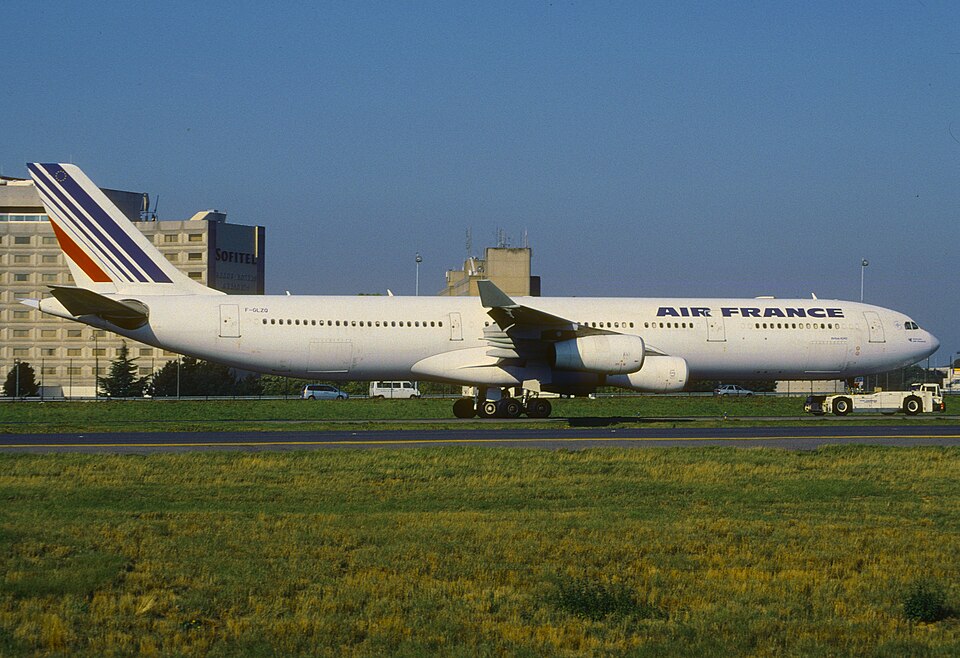
On the day of the accident, Air France Flight 358, an Airbus A340-313 (registration F-GLZQ, serial number 0289), departed Paris, France, at 1153 Coordinated Universal Time (UTC) as a scheduled flight to Toronto, Ontario, with 297 passengers and 12 crew members on board. Before departure, the flight crew obtained the arrival weather forecast, which included the possibility of thunderstorms. While approaching Toronto, the crew was advised of weather-related delays.
On final approach, the crew was informed that the aircraft ahead had reported poor braking action. The aircraft's weather radar displayed heavy precipitation encroaching on the runway from the northwest. At about 200 feet above the runway threshold, while on an instrument landing system approach to Runway 24L with autopilot and autothrust disconnected, the aircraft deviated above the glideslope and groundspeed began to increase. The aircraft crossed the runway threshold about 40 feet above the glideslope.
During the flare, the aircraft traveled through an area of heavy rain, and visual contact with the runway was significantly reduced. Numerous lightning strikes were occurring, particularly at the far end of the runway. The aircraft touched down about 3800 feet down the runway. Reverse thrust was selected about 12.8 seconds after landing, and full reverse was selected 16.4 seconds after touchdown.
Overrun and Evacuation
The aircraft was unable to stop on the 9000-foot runway and departed the far end at a ground speed of about 80 knots. It stopped in a ravine at 2002 UTC (1602 eastern daylight time) and caught fire. All passengers and crew members evacuated before the fire reached the escape routes. A total of 2 crew members and 10 passengers were seriously injured during the crash and ensuing evacuation.
Official Findings
The investigation identified several factors: the crew conducted an approach in a severe and rapidly changing thunderstorm; after autopilot and autothrust disengagement, the pilot flying increased thrust in reaction to decreasing airspeed and a perception of sinking, contributing to increased energy and deviation above the glide path; at about 300 feet agl, wind shifted from headwind to a 10-knot tailwind; the aircraft crossed the threshold at excess height; forward visibility was severely reduced by intense rain; the crew became committed to landing and believed go-around was no longer an option; long touchdown due to float from excess speed and rain; touchdown at 3800 feet left about 5100 feet of runway; thrust reverser selection was delayed; the pilot not flying did not make standard callouts; runway was contaminated by water and crosswind exceeded landing limits; no landing distances were indicated on the flight plan for contaminated runway; the crew did not calculate landing distance required; terrain beyond the runway end contributed to damage and injuries; downpour diluted firefighting foam.
Findings as to risk included: lack of clear guidelines for approaches in convective weather; policy where only captain decides on missed approach; inadequate crew knowledge of rain repellent system; weather information not optimally assisting crews; potential false reliance on ATC; wind information system vulnerability; emergency power location for PA and EVAC systems; lack of brace commands; safety information cards lacking exit details; unclear visual cues on dual-lane slides; evacuation impeded by carry-on baggage retrieval. Other findings noted no indication of captain's medical condition or fatigue playing a role, and that the crew did not request long aerodrome forecast (TAF) information.