History of the Flight
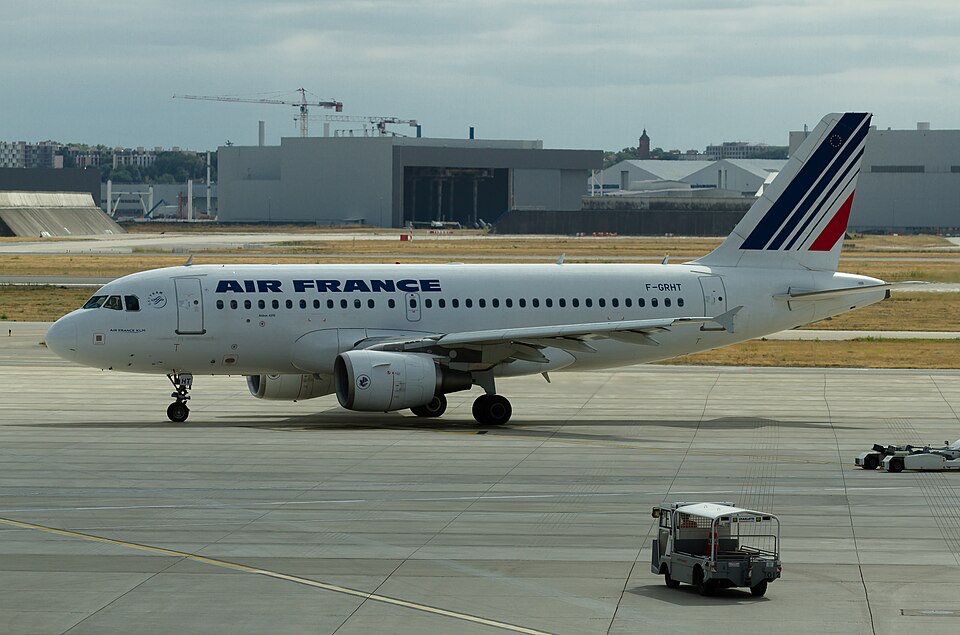
On 12 March 2014, an Air France Airbus A319 (registration F-GRHT) was operating a commercial passenger flight from Marseille to Paris Charles de Gaulle. During the descent, at approximately 13:35 UTC, the crew received a low-pressure warning for both left engine fuel pumps. At 13:42:22, the left engine failed. The crew started the auxiliary power unit, which later stopped, declared an emergency, and landed the aircraft with only one engine operative. No damage or injuries were reported.
Fuel System Issues
The aircraft's fuel quantity indicating system had a known intermittent failure. During the morning flights, a discrepancy of 300 kg was noted. In Nantes, maintenance tested and found a failed sensor in the outer left tank, but replacement was deferred. Later, a crew calculated a 20 kg difference between actual and theoretical fuel, but the true difference was 880 kg.
For the incident flight, the crew requested 5,000 kg fuel based on an indicated 3,780 kg. After refueling, the gauges showed 5,080 kg, but the actual fuel onboard was about 3,800 kg—an overestimation of 1,270 kg by the fuel quantity indicating computer.
Engine Shutdown and Landing
During climb, the ECAM displayed a low fuel level warning for the left wing tank, which the crew considered spurious. They monitored fuel quantities every five to ten minutes. During descent, the left tank pumps lost pressure, leading to the left engine flameout. The crew performed the engine failure procedure and landed on one engine at Paris Charles de Gaulle.
Fuel Consumption and Post-Flight Findings
After landing, ground maintenance found the left fuel tank empty and the right tank containing 1,100 kg (final reserve plus 150 kg). Engine consumption calculations showed the left engine used 1,272 kg and the right engine 1,525 kg from engine start. The fuel quantity indicating computer had overestimated the fuel weight by 1,270 kg, consistent with the indicated 2,370 kg remaining upon arrival.
Procedures and Crew Actions
The operator's fuel management procedure required comparing theoretical fuel with gauge indications and calculating differences. The maximum acceptable difference was undefined, leaving interpretation to crews. A review of previous flights revealed frequent calculation errors and incomplete logs, possibly masking the FQIC failure. The crew followed standard procedures for the low fuel level warning but did not detect the actual fuel shortage due to the faulty indication.