Incident Overview
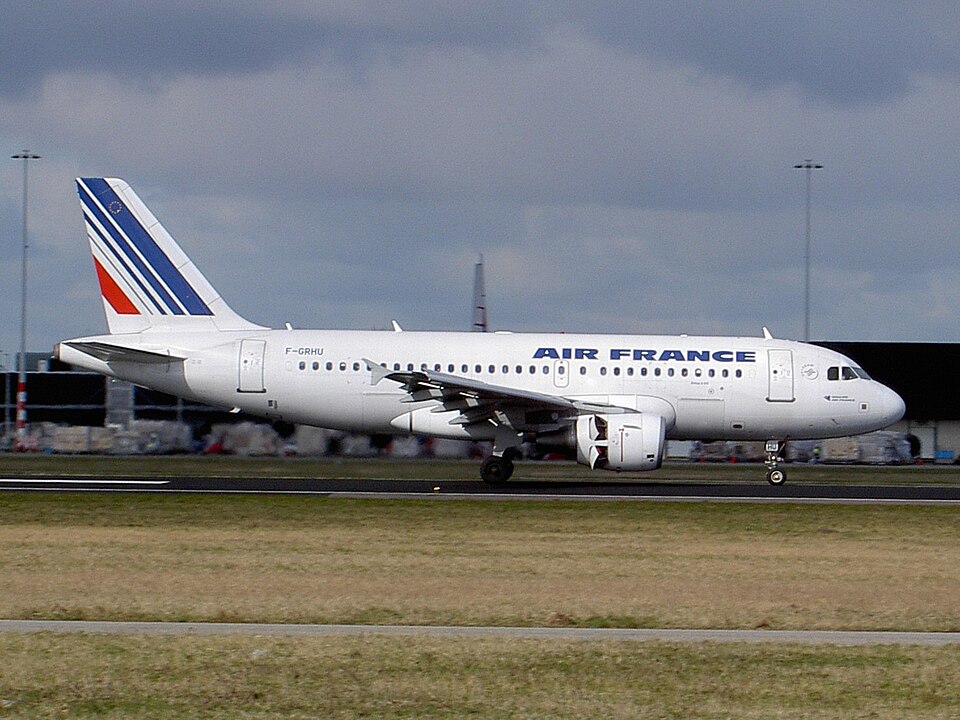
On March 24, 2012, at approximately 08:45 UTC, an Airbus A319 registered F-GRHU, operated by Air France as flight AF2184 from Paris Charles de Gaulle to Tunis-Carthage, experienced an unstable approach. The aircraft was on a scheduled passenger transport mission. No injuries or damage were reported.
Flight Progression and Deviation
The flight crew initiated descent for Runway 29 but received a change of active runway to Runway 19 from air traffic control. This change shortened the approach path by approximately 20 nautical miles, leaving the aircraft significantly above the theoretical 3-degree glide slope. The pilot flying (PF) engaged OPEN DES mode and selected high speeds to attempt to intercept the glide path. As the aircraft descended, it remained well above the required altitude for its distance from the threshold.
Approach Stabilization Failure
At approximately 8 nautical miles from the threshold, the aircraft was still about 3,400 feet above the glide slope with a high vertical speed of -4,400 ft/min. The crew attempted to stabilize by selecting a higher altitude target, which inadvertently reverted the flight director mode to Vertical Speed (V/S) based on the current high descent rate. The pilot non-flying (PNF) focused on a 500-foot stabilization floor, while the PF struggled with workload and failed to communicate his intent clearly.
Go-Around Execution
GPWS alarms for "sink rate," "pull up," and "too low terrain" triggered as the aircraft descended below the glide path at high speed. The crew requested a 360-degree turn, which was initially misunderstood by ATC before being clarified. The PF re-engaged auto-thrust and autopilot, but the aircraft continued to descend due to excessive vertical speed. At 428 feet radio altitude, the minimum height of 398 feet was recorded. The crew executed a go-around, extending flaps to position 1 and advancing thrust levers to TO/GA. They completed a left-hand circuit and landed safely on Runway 19 via a visual approach.
Contributing Factors
The investigation highlighted significant workload issues and a lack of effective communication between the PF and PNF. The PF did not share his plan to attempt a recovery, while the PNF focused narrowly on the stabilization altitude limit. Additionally, cockpit sterile area principles were compromised by non-essential discussions during critical phases of flight.